

Description
Handling and feel
The FREIFECHTER provides a clear sense of the blade, both in motion and in contact with your opponent’s weapon. Its mass distribution supports flowing cuts and precise point control.
In the bind, it gives clear feedback on pressure and the direction of the opposing blade. This is particularly useful when developing feeling in blade contact, maintaining your line and practising winding actions (Winden). Coordinating your hands with your whole body allows you to use the blade’s momentum and move smoothly between actions.
The FREIFECHTER is equally at home in solo practice, partner drills, free sparring and tournament fencing.
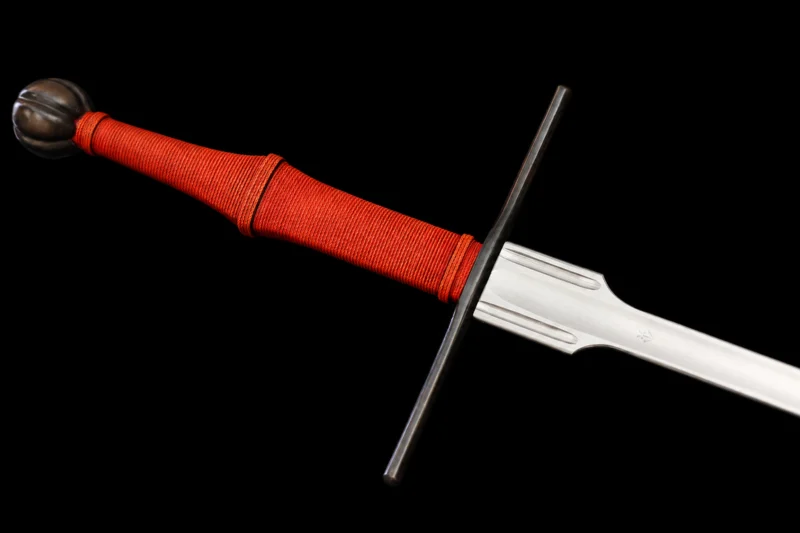
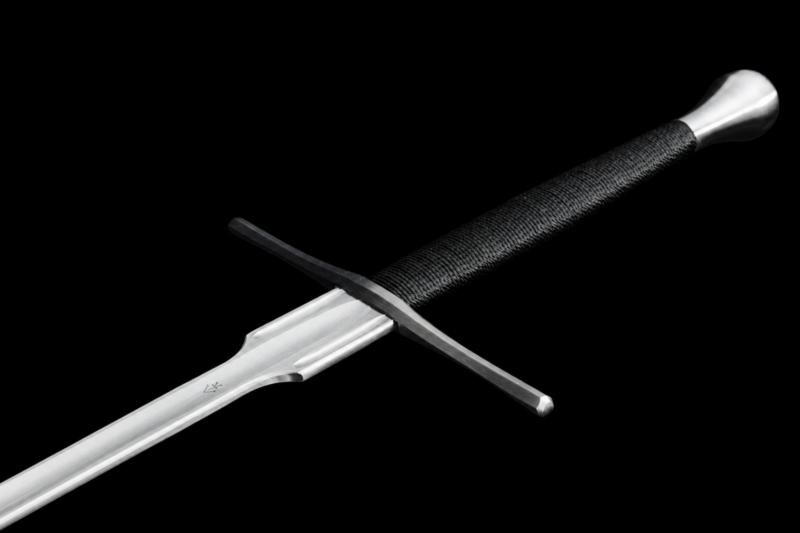
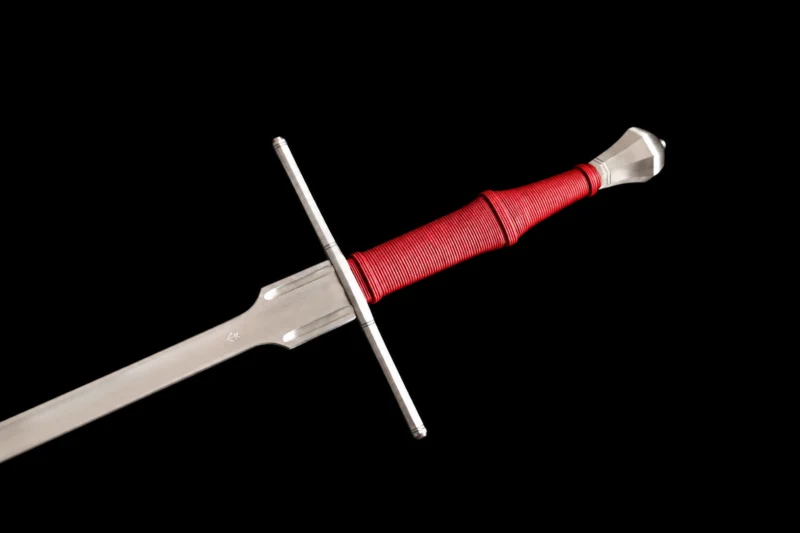
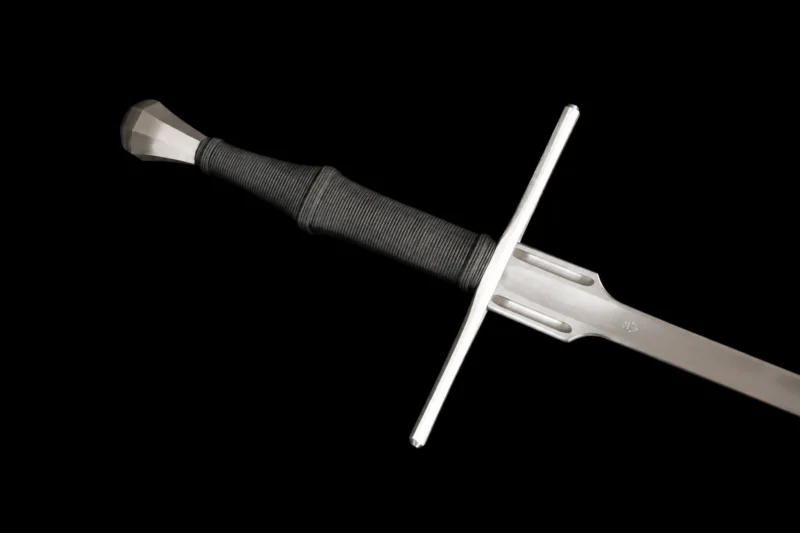
Blade and hilt
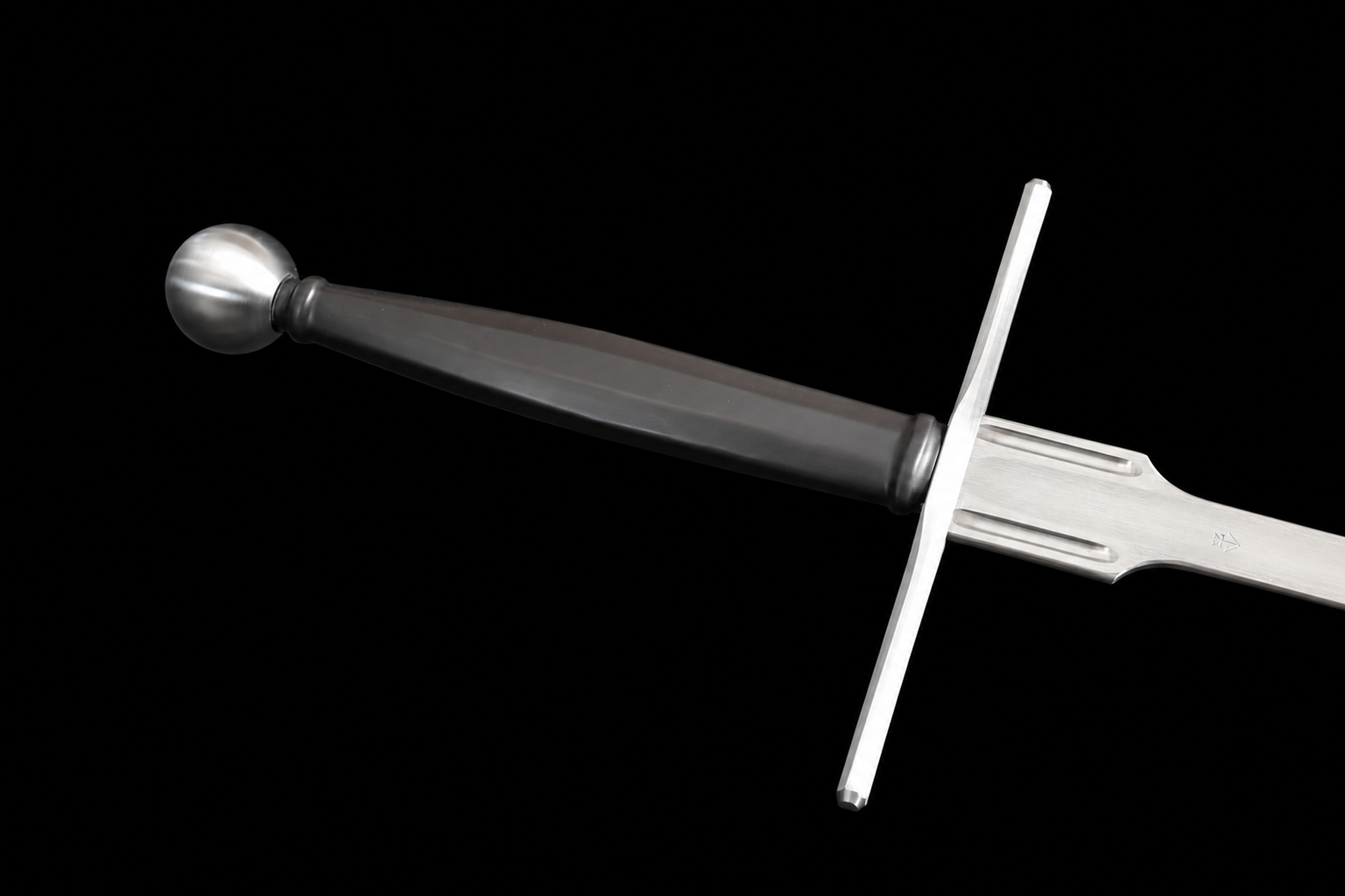
The hollow-ground blade reduces weight while retaining thick, rounded edges measuring 6 to 4 mm. Short fullers on the schilt complete a form inspired by historical training swords.
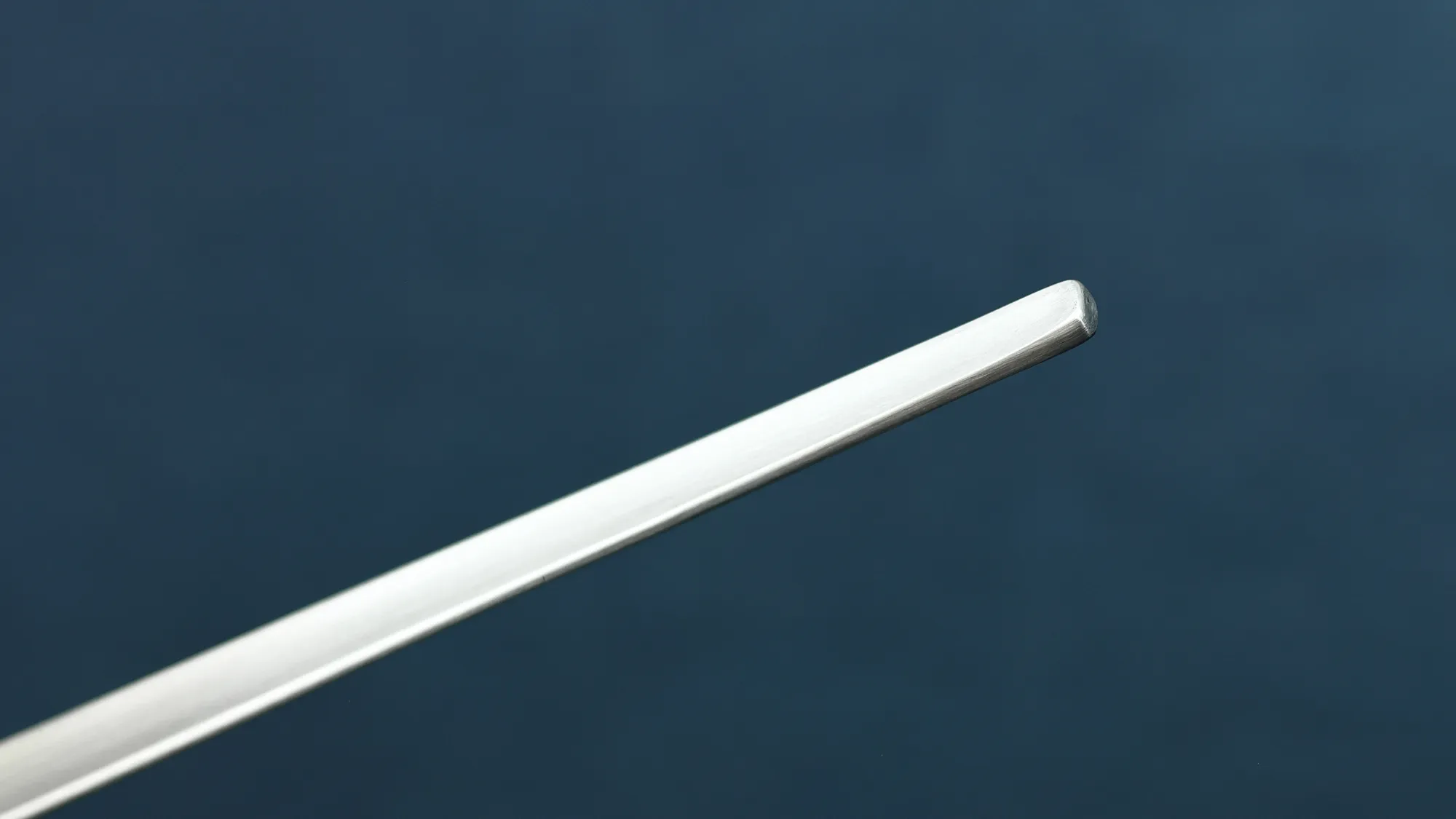
The rounded tip measures 12 × 6 mm. Combined with a blade flex of approximately 14 kg, it is designed to support safer, controlled thrusting in partner drills, sparring and tournaments.
For details of our testing method and how blade flexibility affects fencing, visit our Blade Flex page.
The hardened crossguard has rounded ends and is secured by double peening to help prevent loosening. A peened steel pommel completes the hilt assembly.
Feel and hear the blade
With correct edge alignment, the FREIFECHTER readily produces a clear whoosh, known in Japanese swordsmanship as tachi kaze. Listen to the blade as you practise: its sound provides additional feedback on edge alignment and the fluidity of your cuts.

Craftsmanship behind every piece
We make our swords, feders and sabres by hand in our workshop in Poland. From shaping steel to fitting and finishing the hilt, we combine traditional craftsmanship with practical experience in historical fencing.
Discover our craft →The name behind the feder
The FREIFECHTER takes its name from the historical fencing brotherhood known as the Freifechter von der Feder, or Federfechter, which received its imperial charter in 1607.
The term Freifechter, meaning “free fencer”, also had a broader history as a fencing rank and did not automatically imply membership in this brotherhood. Maciej Talaga explores these distinctions in his article on the history of German fencing confraternities.